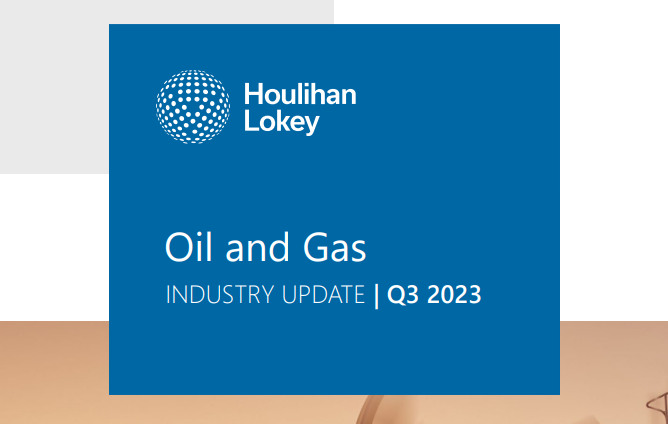
Houlihan Lokey – Oil Gas Industry Update, 3Q 2023
Summary
Throughout the third quarter of 2023, daily benchmark prices for WTI and Brent crude oil remained volatile but experienced an overall increase to over $90 per barrel.
This was primarily driven by factors related to supply and demand. On the supply side, the extension of voluntary production cuts by OPEC+ and a lack of investment in exploration and development contributed to a relatively tight global supply. On the demand side, there was a continued increase in global demand, although the uncertainty surrounding the Chinese economy, the largest market participant, and the potential for a global recession could impact future demand. Saudi Arabia and Russia announced on September 5th their plans to extend their voluntary export cuts until the end of 2023. If all suppliers comply and nothing else changes, this implies a potential global deficit of 3.3 million barrels per day in the fourth quarter of 2023. China's total crude oil imports in August 2023 were the second-highest on record, indicating their aggressive filling of crude oil storage reserves and increased refined production. China's export of refined products also nearly doubled in September compared to March 2023. Underinvestment in exploration and development globally has been influenced by depressed oil prices during the previous down cycle, ESG pressure, and the focus of the upstream sector on returning capital to shareholders. This, combined with the anticipation that demand will outpace supply, has led many commodity analysts to be bullish on future oil prices, with some forecasting prices to reach around $100 per barrel for WTI by the end of 2023. The limitations on Russian crude oil and refined product supply have had a significant effect on global crude prices. Russia recently banned the export of diesel for an unspecified period, causing global diesel futures to increase by approximately 4%. Prior to this ban, diesel prices had already been rising due to production cuts by Saudi Arabia and Russia.
Region:
Published:
Author(s):
Language:
Geopolitical drivers:
Found an inaccuracy in the description? Let us know 🙌
Latest Viewed Reports