Kapsarc – Progress and Gaps in the Adoption of Clean Cooking Fuels
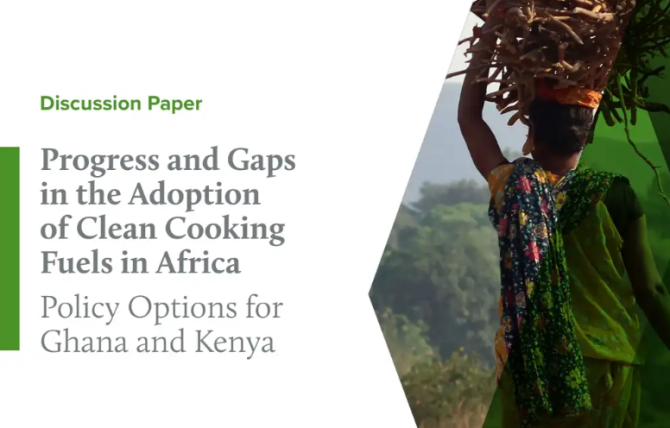
The document analyzes the current state of access to clean cooking fuels in Ghana and Kenya.
Key findings include the dominance of traditional biomass fuels like wood and charcoal in African households, leading to significant indoor air pollution and environmental degradation. Urban areas in both countries are gradually transitioning to liquefied petroleum gas (LPG) and electricity for clean cooking, while rural communities remain heavily reliant on biomass due to infrastructural, economic, and cultural constraints. This reliance entails significant socio-economic and environmental costs, estimated at $18 billion and $39 billion annually in Ghana and Kenya, respectively. The document emphasizes the crucial role of targeted policy interventions, including the expansion of LPG infrastructure, provision of financial subsidies, and implementation of culturally adapted solutions.