Strategy& – Maximising Impact
Summary
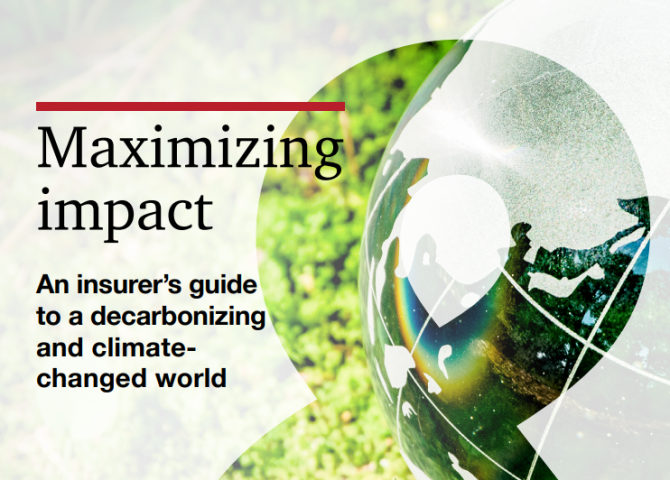
Insurers in today's world face both challenges and opportunities due to climate change.
This global issue amplifies existing risks and brings in new ones, affecting insurers' operations. To adapt and succeed in a decarbonizing world, insurers must understand the key risks they face and respond to them effectively. Climate change presents the largest risk and opportunity for insurers in the coming decades. These risks can be categorized into physical risks (direct impacts of weather), transition risks (related to decarbonization responses by society), and litigation risks (resulting from legal action). These risks have an impact on insurers' operational, reputational, and underwriting processes, varying across geography, sector, and time. Failure to integrate climate risks into risk assessments and underwriting processes threatens insurers' financial sustainability. Policymakers are taking actions to address climate change, including setting decarbonization goals and incentive schemes. These initiatives reshape sectors and economies, impacting the demand and pricing strategies for insurance products. To remain relevant and seize new opportunities, insurers should: 1) Understand climate risks and their impact areas, conducting comprehensive assessments; 2) Quantify the financial impact of decarbonization and climate risks on existing products and services; and 3) Evolve their product and service offerings to respond to decarbonization and climate change, addressing changing customer needs and expanding into new areas. Insurers can leverage their unique position to actively drive change, reduce climate-related risks, and position themselves as responsible institutions, building trust with their customers.
Region:
Published:
Author(s):
Language:
Geopolitical drivers:
Found an inaccuracy in the description? Let us know 🙌
Latest Viewed Reports