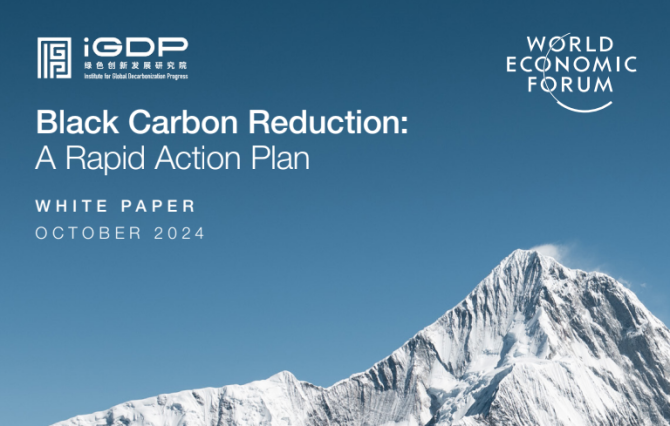
WEF – Black Carbon Reduction: A Rapid Action Plan, Oct 2024
Summary
The report by the WEF highlights the well-established impact of black carbon on Arctic ice melt, Himalayan glaciers, and the Indian monsoon, as well as its detrimental health effects.
Despite the known benefits of reducing black carbon emissions, global policy responses have been inadequate. The paper analyzes case studies from Brazil, China, India, Nigeria, and the United States to identify key obstacles to black carbon mitigation. It highlights the lack of emphasis on short-lived climate forcers by international frameworks like the UNFCCC, insufficient technical guidelines for addressing black carbon emissions, and the undervaluing of black carbon mitigation in economic development. The paper suggests incremental steps to reduce black carbon emissions from different sources and emphasizes the importance of global collaboration, health ministry involvement, and climate finance to address these challenges. Recommendations are made for the global climate community to prioritize black carbon mitigation efforts and invest in legal frameworks, technical tools, and financial mechanisms to drive progress in this area.
Region:
Published:
Author(s):
Language:
Tech drivers:
Geopolitical drivers:
Found an inaccuracy in the description? Let us know 🙌