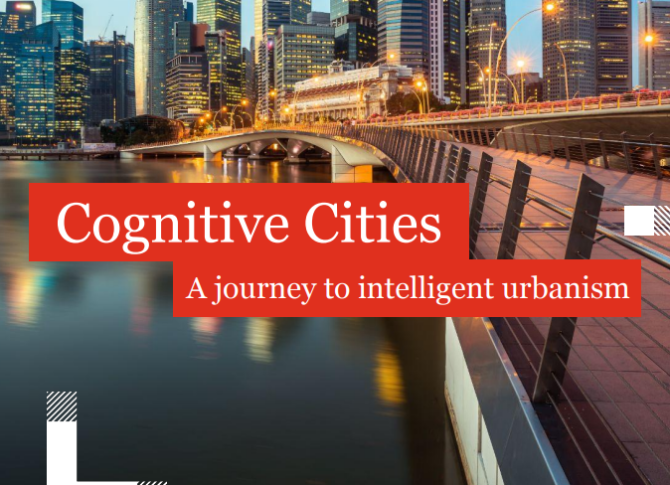
PWC – Cognitive Cities A journey to intelligent urbanism
Summary
The increasing global urban population has led to significant challenges for policymakers, municipalities, and service providers in creating sustainable and efficient cities.
As cities continue to expand, government entities must deal with the growing demands for public services and infrastructure. However, advancements in technology over the past two decades have paved the way for cognitive cities, which are at the forefront of innovation in urban development. Cognitive cities utilize data, artificial intelligence, and cognitive computing to transform urban areas into intelligent and adaptable ecosystems. These cities are not only technologically advanced but also possess the ability to learn from data, adapt to changing circumstances, and autonomously deliver services, ultimately improving the well-being and livability of their residents. The goal of cognitive cities is to enhance the capabilities and decision-making processes of humans while reducing their efforts. By doing so, these cities aim to improve overall quality of life. This paper explores the fundamental principles of cognitive cities, the key factors that enable their success, lessons learned from cities that have embarked on the journey towards becoming cognitive, and the potential implications and opportunities for stakeholders in the urban ecosystem.
Furthermore, it examines how cognitive cities have the potential to reshape city governance in order to create more sustainable, resilient, and prosperous futures.
Region:
Published:
Author(s):
Language:
Found an inaccuracy in the description? Let us know 🙌
Latest Viewed Reports