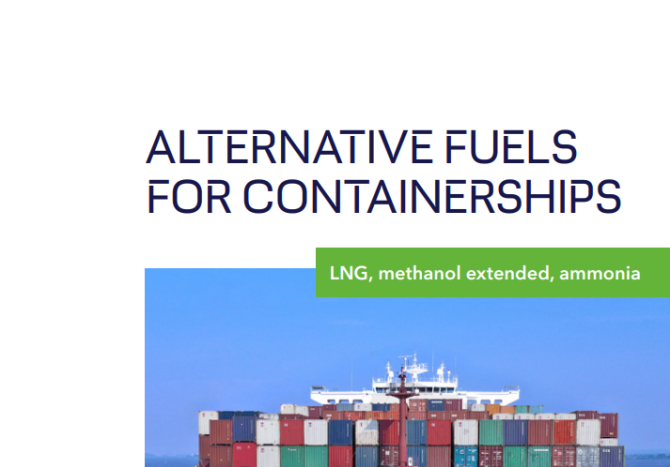
DNV – Alternative Fuels for Containerships
Summary
The maritime industry is facing increasing pressure to reduce its carbon emissions.
Choosing the right fuel is crucial in decarbonizing the industry, and various alternative options are emerging. However, in the container sector, it is important to determine the best alternatives and find practical and economical ways to implement them. DNV, an independent expert in risk management, is launching a new series called "Alternative Fuels for Containerships," which aims to examine different alternative fuel options and provide insights into the technical and commercial considerations in the container sector. In the first edition of the series, DNV focuses on liquefied natural gas (LNG) as a proven and readily available solution. The report delves into several aspects:
1. The challenge of greenhouse gas emissions in shipping.
2. Comparing LNG with heavy fuel oil (HFO) and its potential as a transition fuel towards low and zero-carbon options.
3. The availability of bunkering infrastructure and its relevance to the global fleet.
4. The technical aspects of engines, fuel systems, and tanks required for LNG usage.
5. The commercial considerations, such as the capital and operational expenditures (CAPEX and OPEX), associated with adopting LNG in newbuildings and retrofits.
6. Regulatory aspects surrounding the use of LNG in containerships. DNV's examination of the available alternative fuel options and their technical and commercial aspects aims to assist the container sector in making informed decisions towards greener and more sustainable future operations.
Region:
Published:
Author(s):
Language:
Geopolitical drivers:
Found an inaccuracy in the description? Let us know 🙌